We have written a blog all about how to take your dog into Morocco but what if, while you’re visiting, you fall deeply in love with a four-legged friend? This post tells you what you need to know about how to take a dog or puppy out of the country.
Why you might want to take a dog or puppy home with you from Morocco.
If you have an open heart for furry friends, no doubt you will fall deeply in love with at least one stray dog or puppy in Morocco. You’re also likely to witness situations which hurt your full heart where puppies are without mothers, dogs are miss-treated, dogs are skinny and hungry or mothers that are continuously bread from and just need a break. You might even be concerned that dogs may be disposed of by the local authorities.
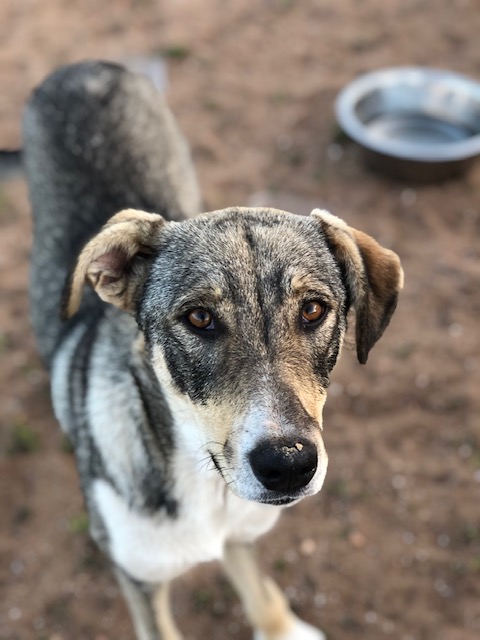
You’re also likely to find the majority of street dogs in Morocco gorgeous, friendly, loving, calm and loyal – I mean, what more could you want from a dog?!
Why are there so many stray dogs on the streets in Morocco?
There are a number of reasons why there are so many stray dogs in Morocco:
Stray dog populations increase due to the the lack of spaying and neutering. There are some amazing charities in Morocco that work to neuter/sterilise, treat, vaccinate, tag (and often release or re-home) dogs such as Moroccan Animal Aid (MAA), SARA Morocco, SFT Animal Sanctuary and Beldi Refuge. However, the amazing work of these charities can only be carried out through private donation support. Most of these charities are also on rented land and space is limited and funds are low. The Moroccan Minister of the Interior is said to have allocated MAD 70 million (7 million euros) to help with vaccination programs and ruled against the killing of stray dogs in 2019. However, this allocation is not stretching far enough and the local authorities do not always abide by this law. The killing of street dogs is widespread with the local authorities intending to clean up their streets. There is fear that in the lead up to the FIFA World Cup, more dogs will be killed, including those healthy dogs that have been neutered, vaccinated and tagged.
Rapid Urbanisation, where the population has shifted from rural to urban locations has lead to the displacement of dogs without shelter or care.
Dogs are not seen as domesticated pets in Morocco. In fact, the majority cultural belief is that dogs are unclean with a similar islamic opinion to that of pigs. You will however see many well-fed cats, especially in towns like Essaouira. In the Muslim religion, the Prophet revered cats and asked his followers to look after them.
When travelling through Morocco, you will see a wide variety of economic conditions, ranging from the affluent in cities like Casablanca to the very poor in areas such as the Draa-Tafialet in Southeastern Morocco. Despite making economic progress, living standards are low, making it difficult for people to financially look after their pets.
There are over three million stray dogs in Morocco
How can you help?
Adopt a dog from one of the many wonderful animal charities (listed above) in Morocco.
Take a dog with you to love and care for [read on]…
How can I take a stray dog from Morocco back to my home country?
So you’ve fallen in love with little Rex and you desperately want to cosy him up in your camper, get to know him and let him get to know you, and when you’re ready to leave Morocco, take him to your home country with you.
You have a couple of options here:
You could try and smuggle little Rex back with you. Indeed, Morocco don’t care much about you taking a dog out of their country. The European country you enter however will. You could get away with it, or you could end up with huge fines and in the worst instance, the dog could be impounded and/or destroyed. You also run the risk of bringing diseases into European countries if your Moroccan pup has not been vaccinated. Doesn’t sound like a risk worth taking? That’s ok, there’s a proper way to do this and you and your pup will be just fine:
The Process for taking a stray dog or puppy out of Morocco.
The first thing you need to do is to get your chosen street pup to a vet to get the ball rolling as soon as possible. You can find a list of vets in Morocco here, although we highly recommend Cabinet Veterinaire La Lagune in Essaouira.
At the vets you can have your pup treated for ticks, worms and fleas, have a full health check and most importantly get his Rabies & viral vaccinations.
Remember: puppies need to be 3 months old before they can have their Rabbies vaccination. If this presents a problem to you because of your own visa restrictions, you could arrange for the puppy to be looked after and vaccinated at one of the Animal Charities listed above.
A month later, you can return to your vet so that your dog can have his Rabies booster.
90 days (three months) after that, you can return to the vet again for:
a rabies test. This is to ensure there are enough rabies antibodies in the dog – o.o5 is enough to pass the test
have your dog microchipped
It’s worth noting here that this process has already taken five months (and that’s if your dog is over 3 months old). You may need to consider your own visa options while you wait for this process to be complete. Options here are to pay for all this to be done at one of the Animal Charities (listed above) and come back to collect your dog when it is ready to travel. The cost for treatment, vaccinations and care could cost between £750 and £1500. Other options available to you, if you have the time is to extend your own visa. You can do this via a local police station (which is often time consuming). Some campsites will arrange this for you but means you’re staying put in their campsite for a while. Alternatively you can exit and re-enter Morocco at the Spanish enclaves; Ceuta, or Melilla or cross to Mauritania.
Documents you will certainly need to exit out of Morocco and onto your destination country will include:
Vaccination records
Blood test certificate
Health certificate certified by a vet
Microchip certificate
In addition, your destination country may require addition documentation or even for your dog to spend time in quarantine prior to travel. You can find out the specific requirements for your destination county here.
For dogs coming to England, the requirements include:
ISO compliant Mircochip
Rabies Vaccination Record
A Rabies Titre Test Certificate
Tapeworm Treatment (identified on health certificate)
Pet Health Certificate authenticated by a registered Vet
A new life for your Moroccan stray dog.
We truly hope this post helps provide you with some information to make an informed decision when considering taken one of the many beautiful street dogs back to your home country. It’s a long and sometimes expensive process, but is bound to change both yours and your new rescued dogs life.
If you feel called to, please donate to the wonderful charities doing amazing work in Morocco that offer medical care and shelter to so many dogs as well as carrying out neuter, spaying, vaccination and tagging programs throughout Morocco: Moroccan Animal Aid (MAA), SARA Morocco, SFT Animal Sanctuary and Beldi Refuge.
Hey Nick! Aww almost on soooo many occasions but we decided that there just wasn’t enough room in the truck for another one, especially with the two oldies…but who knows in the future!! Hope you’re enjoying your travels 🥰




 The Wandering FamiLee
Leave a comment